Lifelock12 Best Identity Theft Protection Services Compared by Coverage and Who They Fit
12 Best Identity Theft Protection Services Compared by Coverage and Who They Fit
The short answer
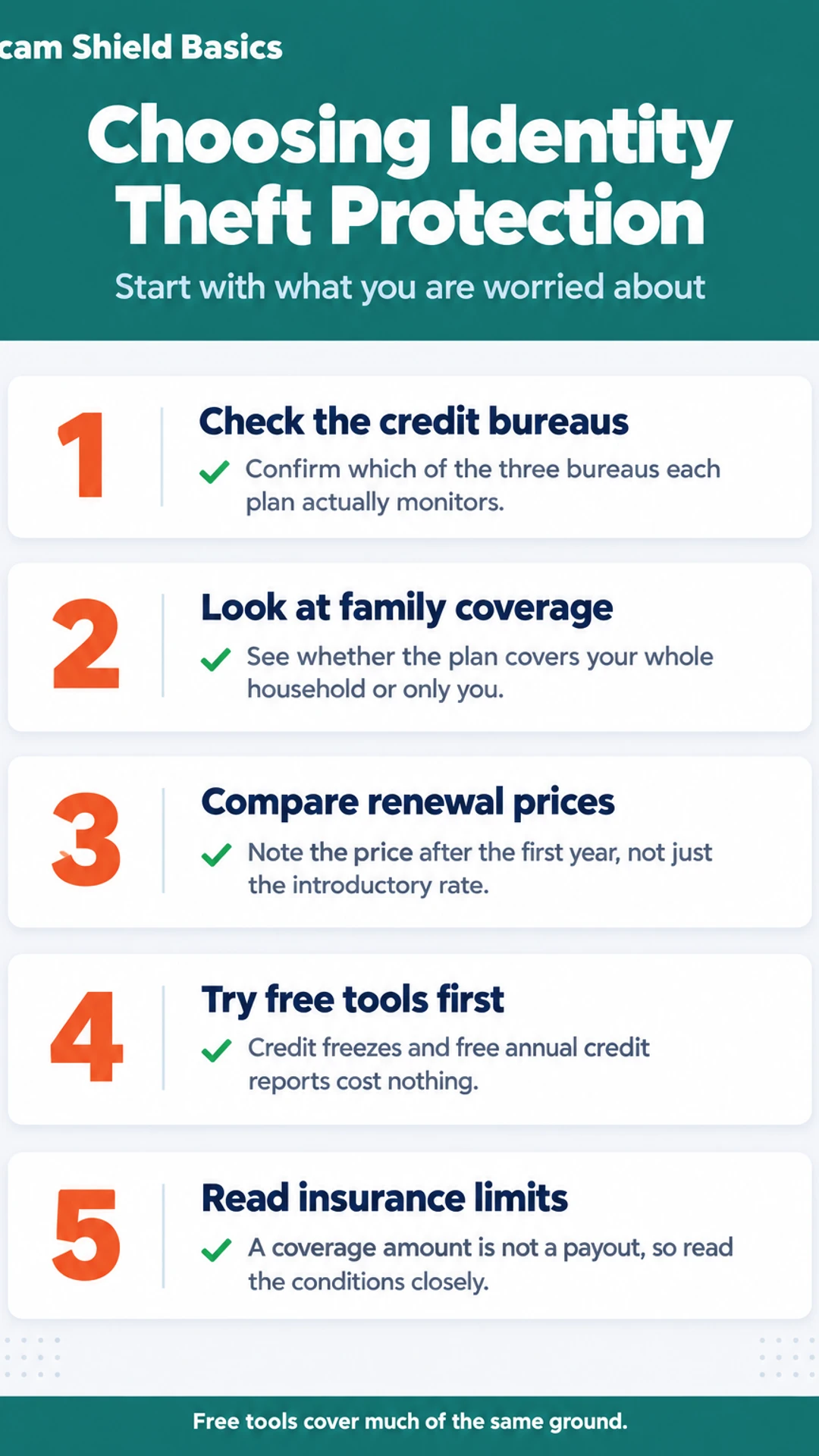
The best identity theft protection service depends on what you need covered. Most plans offer credit monitoring, dark web alerts, recovery help and insurance, but the depth differs. Check which credit bureaus are monitored, whether the plan covers your whole family, and what the renewal price will be. Free credit freezes and free annual credit reports already cover some of this at no cost.
Some links on this site are affiliate links: if you buy through one, the site may earn a commission at no extra cost to you. More about this.
This page compares 12 identity theft protection services side by side, so you can see what each one covers and who it tends to suit. The list is built from the main types of service people actually buy, and from what each provider says it includes. It is not a ranking based on tests I ran myself.
If you are deciding whether to pay at all, start with what you are worried about. A recent data breach notice, a scam that already reached you, and a general wish for peace of mind each lead to different choices. I have not personally tested every plan here, so where the details below come from other reviewers, I say so.
Let's dive in.
Identity theft protection options at a glance
| Option | Best for | Key feature | Price as stated |
|---|---|---|---|
| LifeLock | Full-service monitoring and recovery help | Credit monitoring, identity alerts, credit lock | Not stated |
| Aura | Single plan without tier upgrades | Credit monitoring, account alerts, family plans | Significantly less than LifeLock (reviewer) |
| Norton LifeLock | Readers who want Norton security software | Identity monitoring bundled with antivirus and VPN | Not stated |
| Identity Guard | Budget-conscious buyers wanting many alert types | Alerts for new accounts, credit changes, data exposure | Not stated |
| Coveron | Readers wanting to check monitoring and insurance terms | Identity monitoring and alerts | Not stated |
| IdentityForce | Fast alerts on credit or personal info changes | Notifications when credit file or data changes | Not stated |
| Experian IdentityWorks | Readers focused on one credit bureau | Alerts on new accounts and inquiries (Experian only) | Not stated |
| Allstate Identity Protection | Monitoring plus reimbursement policy | Reimbursement for certain recovery costs | Not stated |
A closer look at each
LifeLock: The best-known name in this category, and the subject of this hub. It offers credit monitoring, identity alerts, a credit lock, and help with recovery if your identity is stolen. Plans are sold as tiers, so check which one includes three-bureau monitoring before you sign up, since the cheaper tier may cover fewer bureaus. Read our hub page for the full breakdown.
Aura: A common alternative that reviewers often compare directly with LifeLock. In one reviewer's comparison, Aura was described as having no tiers and costing significantly less. It bundles credit monitoring, account alerts, and family plans. If you want a single plan without paying for upgrades to get full coverage, it is worth comparing side by side with LifeLock.
Norton LifeLock: Worth separating from LifeLock because it is sold with the Norton antivirus and VPN bundle. You pay for identity monitoring and security software together, which suits someone who already wants Norton on their computers. The reviewer in one hands-on video said the bundle's main draw is the Norton name and tools, so if you do not need those, a standalone plan may fit better. See our page on Norton LifeLock.
Identity Guard: Often listed as a budget-conscious option with a broad set of alert types. It is aimed at people who want alerts for new accounts, credit changes, and personal data exposure without paying premium prices. Like most services in this category, its value depends on the tier you pick. Look closely at what each tier includes, because the lower price usually means fewer features.
Coveron: A less familiar name that appears in the top search results. Before you buy, check what its identity monitoring and alerts cover, whether its insurance terms are clear, and how renewal pricing works.
IdentityForce: Included for readers who value fast alerts. It sends notifications when your credit file or personal information changes, so you can act soon after something happens. Speed matters most when a new account opens in your name, since early alerts give you more time to freeze your credit and contact the bank.
Experian IdentityWorks: This is a credit-bureau-linked option, so it suits readers mainly focused on credit file monitoring. It watches your Experian file and sends alerts when new accounts or inquiries appear. Because it is tied to one bureau, it does not show changes on your TransUnion or Equifax files. Check which bureaus any plan covers before you pay.
Allstate Identity Protection: This option fits readers who want a reimbursement policy alongside monitoring. Coverage typically pays for certain out-of-pocket costs tied to recovering from identity theft, such as some lost wages or legal fees. Read the policy limits and conditions closely. A coverage amount on a sales page is not the same as a payout you can count on.
IDShield: This service is aimed at readers who worry about online reputation and the spread of personal data. It focuses on watching where your information appears and on helping limit what is publicly findable about you. It is a fit if your concern is privacy exposure more than financial damage. If your main worry is a new account opened in your name, check how it handles credit alerts first.
Free credit freezes and free credit reports: These are the free baseline every paid plan should be measured against. A credit freeze is free at each of the three bureaus and stops new accounts from being opened in your name, and you can lift it when you need credit. You can also get free weekly credit reports from each bureau at AnnualCreditReport.com. Ask what a paid plan does beyond this.
Dark web monitoring alone: Many plans advertise dark web monitoring, and it deserves a close look. The tool scans sites and markets for your email, Social Security number or card numbers. An alert tells you your data was found, not that anyone has used it, and it cannot remove the data. In one reviewer's test, Finance Pulse noted that a competing service found leaked Gmail credentials that another product missed, so alert coverage varies widely between services. Treat it as one signal, not full protection.
Who should skip paid protection: Many people do not need a paid plan at all. If you mainly want to know whether your credit has been touched, and you are comfortable setting up freezes and reviewing your bank and card statements, the free tools cover much of the same ground. A paid plan is more likely to be worth it if you want someone to handle the paperwork after a theft, or if you have already been hit by fraud and want ongoing alerts. Compare the first-year price with the renewal price before you decide.
What hands-on reviewers found
These are other people's hands-on tests, summarised and credited to them. Watch the full videos for their complete reviews.
Finance Pulse: LifeLock Tutorial 2026: Full Setup Walkthrough & Honest Review 🛡️
The reviewer thinks LifeLock is worth paying for mainly for its automated data broker removal and alerts, while noting it has real gaps: the credit lock covers only TransUnion, Core lacks scam coverage, and cancelling does not lift the lock
- The whole LifeLock setup took about 20 minutes, covering plan selection, signup, credit locking, alerts and monitoring. (at 0:18)
- Connecting a bank account through Plaid took about 30 seconds per account, and the reviewer says it needs no further attention afterward. (at 1:36)
- The reviewer says the credit lock and payday loan lock can be toggled from a phone, which matters when someone is at a car dealership. (at 2:45)
The Tech Roost: Lifelock Review - Here’s Who It’s Actually For
The reviewer thinks LifeLock is a legitimate product but suited only to a specific buyer who wants the Norton name, antivirus and VPN and will pay more for them, and considers Aura the better fit for most people.
- Compared to the rest of the category, LifeLock has real strengths: brand recognition, a strong VPN, and antivirus from the Norton ecosystem that does not slow the computer down. (at 0:34)
- In side-by-side testing that simulated a credit check or major purchase, LifeLock consistently came in last on alert speed, with the reviewer citing 2 to 3 minute alerts for modest services. (at 2:59)
- During the reviewer's first on-camera LifeLock signup call about a hypothetical problem, the representative would not let them hang up before pitching a coverage upgrade. (at 4:20)
Frequently asked questions
Does Dave Ramsey recommend identity theft protection?
Dave Ramsey is known for his budgeting and debt advice, and I have not seen a specific recommendation from him on identity theft protection that I can point to. Many people in his circle suggest free tools first, like credit freezes and free credit reports, before paying for a monitoring service. For a clear answer, check his own published materials.
What's better than LifeLock?
The right alternative depends on what you need. Some people want similar monitoring for less, and others want antivirus or a VPN bundled in. Reviewers in the hands-on videos I looked at generally pointed to Aura as a better fit for many people starting from scratch. Compare coverage and renewal terms before you decide.
What is better, LifeLock or Identity Guard?
It depends on which features you care about most. LifeLock is widely known and bundles antivirus and a VPN in some plans. Identity Guard is another option people compare it with. The difference that matters most is which credit bureaus each plan monitors and what the higher tiers unlock, so check those details side by side.
Is it worth paying for identity theft protection?
It can be, if you want alerts and help handling paperwork after a breach or scam. Many of the basics are free, though: credit freezes and free credit reports from the bureaus. Paid plans add monitoring and sometimes insurance. If you have never been affected and already freeze your credit, you may not need to pay for more.
How do you choose the identity theft protection services in this list?
The picks here are compared on what each service covers, who it suits, and how its scope differs. The list is not ranked on tested results, because I have not run hands-on tests of these products myself. Where I mention what a reviewer found, I credit that person by name.
Wrapping up
That covers the 12 options in this comparison, sorted by coverage and by who each one fits.
None of them is right for everyone. Start with what worried you most: a data breach, a scam already in progress, or a wish to keep everything in one subscription.
Which one will you try first, or is there one I missed? Tell me in the comments.
If you want to look at the current offer for Surfshark's scam protection, you can visit the official site. It covers alerts when your personal data is leaked, blocking of malicious sites, ads and trackers, and protection from text message scams, with a 30-day money-back guarantee.